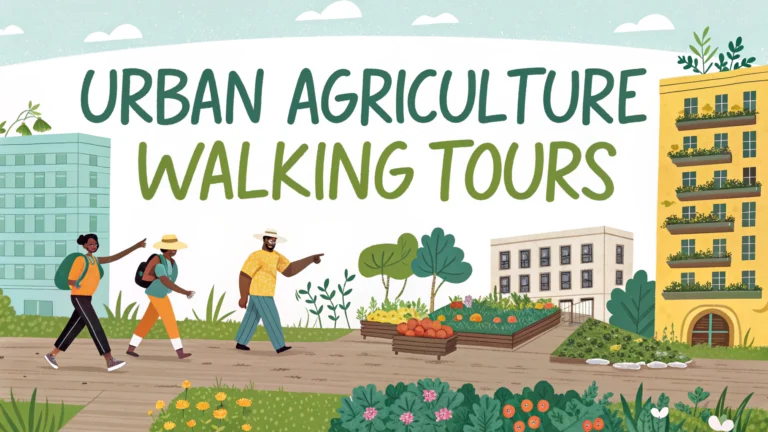
Urban agriculture walking tours offer a unique way to explore city farming initiatives while learning about sustainable food systems.
Planning Your Self-Guided Urban Agriculture Tour
Download offline maps and tour routes before starting your walk to ensure smooth navigation between urban farming sites.
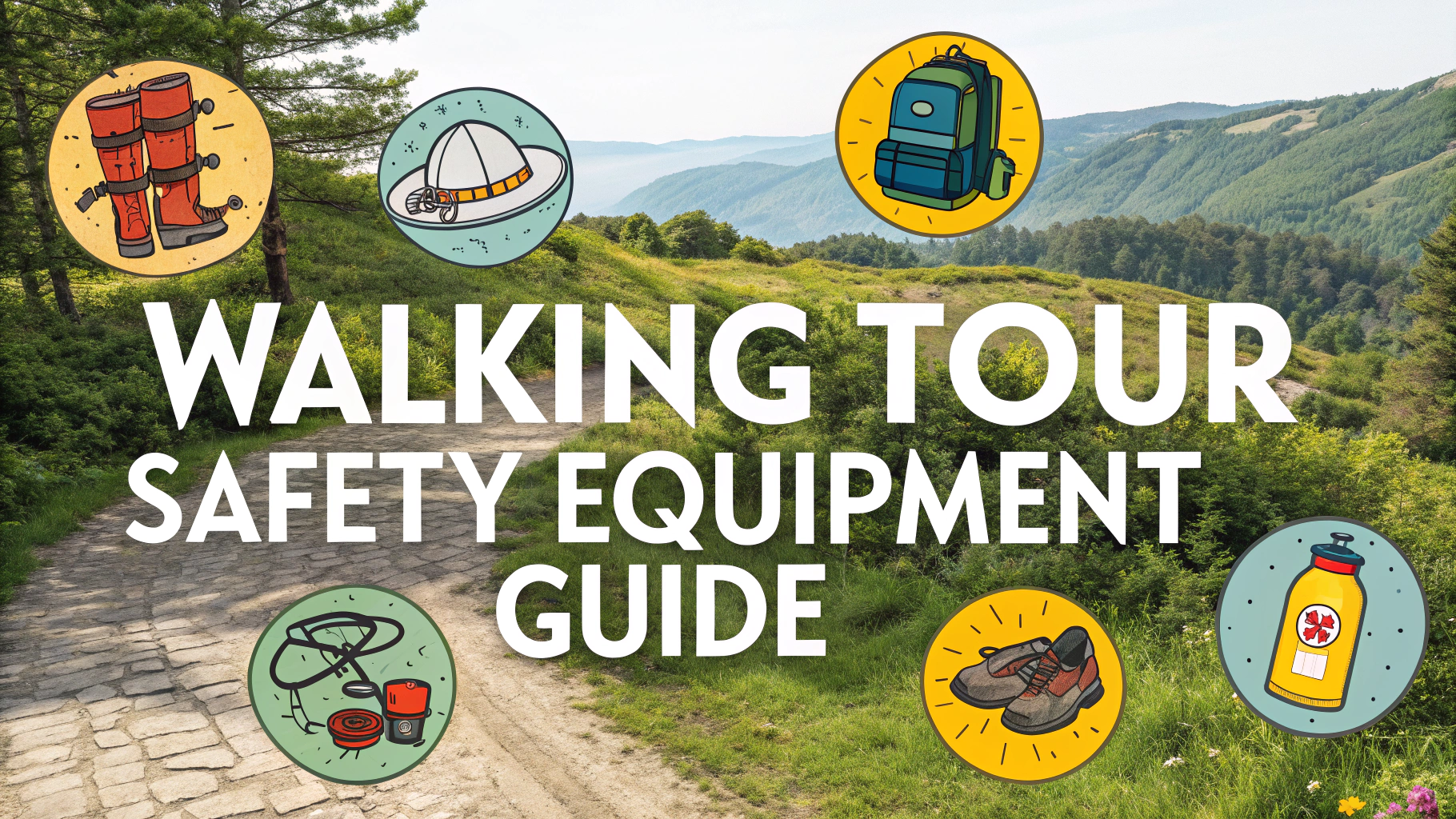
Essential Items to Bring
- Comfortable walking shoes
- Water bottle
- Camera
- Small notebook
- Weather-appropriate clothing
Best Times to Visit
| Season | Benefits |
|---|---|
| Spring | Planting season, seedlings visible |
| Summer | Peak growing season, most activity |
| Fall | Harvest time, community events |
Common Types of Urban Agriculture Sites
- Community gardens
- Rooftop farms
- Vertical gardens
- School gardens
- Urban orchards
Photography Guidelines
Always ask permission before taking photos of private garden spaces or people working in them.
Engaging with Urban Farmers
- Ask about volunteer opportunities
- Learn about growing techniques
- Inquire about seasonal crops
- Request tips for home gardening
Safety Tips
- Stay on designated paths
- Respect private property
- Check opening hours beforehand
- Walk with a companion when possible
Educational Opportunities
Many urban farms offer workshops and classes on topics like composting, seed saving, and sustainable growing practices.
Creating Your Route
Research local urban agriculture sites through resources like American Community Gardening Association or local food policy councils.
Sample Route Planning
- Map out sites within walking distance
- Plan logical walking sequence
- Include rest stops
- Note public transportation options
Contact local urban agriculture organizations to verify visiting hours and access requirements before starting your tour.
Sustainable Transportation Options
- Public transit routes to major garden sites
- Bike-sharing programs
- Walking paths connecting multiple locations
- Car-free routes when possible
Supporting Local Food Systems
Consider purchasing produce or plants from urban farms that offer sales to support their initiatives and sustainable farming practices.
Ways to Support
- Buy locally grown produce
- Attend fundraising events
- Join CSA programs
- Donate resources or time
Documentation Tips
- Journal your observations
- Record growing techniques
- Note seasonal variations
- Document unique urban solutions
Conclusion
Urban agriculture tours provide invaluable insights into sustainable city farming while connecting visitors with local food systems. These experiences help build awareness of food security issues and inspire participation in urban farming initiatives. Through careful planning and respectful engagement, visitors can maximize their learning experience while supporting vital community resources.
Next Steps
- Join local urban farming networks
- Share experiences with others
- Consider starting a garden
- Advocate for urban agriculture policies
FAQs
- What is an urban agriculture walking tour?
A self-guided walking tour that explores community gardens, rooftop farms, vertical gardens, and other urban agricultural initiatives within a city’s neighborhoods. - How long does a typical urban agriculture walking tour take?
Most self-guided urban agriculture tours take 2-3 hours to complete, covering approximately 1-2 miles of walking distance, depending on the route and number of stops. - What are the best seasons for urban agriculture walking tours?
Spring and summer are optimal seasons when most crops are growing and gardens are in full bloom, typically from April through September in most temperate regions. - What should I bring on an urban agriculture walking tour?
Essential items include comfortable walking shoes, water bottle, weather-appropriate clothing, camera, map or mobile device with tour route, and sun protection. - Are urban agriculture walking tours accessible to everyone?
Most tours follow public sidewalks and streets, though accessibility varies by location. Some gardens may have limited wheelchair access or stepped entrances. - What types of urban agriculture sites can I expect to see?
Common sites include community gardens, school gardens, urban farms, rooftop gardens, vertical growing systems, composting facilities, and urban greenhouses. - How can I find urban agriculture walking tours in my city?
Contact local community garden organizations, urban farming networks, agricultural extension offices, or city parks departments for available tour routes and maps. - Can I visit all urban agriculture sites on the tour route?
Some sites may be private or require advance permission to visit. Public viewing areas and community gardens are typically accessible during daylight hours. - What can I learn from an urban agriculture walking tour?
Tours demonstrate sustainable farming practices, local food production, community engagement, urban land use, composting methods, and innovative growing techniques. - Are guided versions of urban agriculture walking tours available?
Many cities offer guided tours led by urban farming experts, typically scheduled monthly or seasonally through local agriculture organizations or community groups.