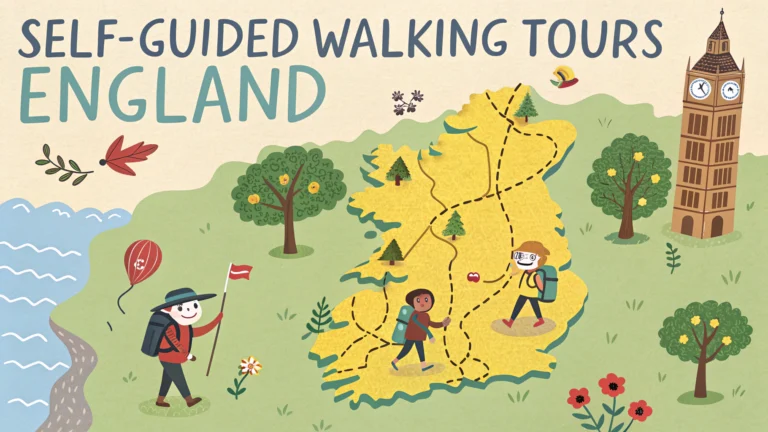
England’s diverse landscapes and rich history make it perfect for self-guided walking tours, letting you explore at your own pace while discovering hidden gems.
Popular Self-Guided Walking Routes
- Cotswolds Way – 102 miles through rolling hills and historic villages
- Hadrian’s Wall Path – 84 miles across northern England’s Roman frontier
- Thames Path – 184 miles following England’s most famous river
- South West Coast Path – 630 miles of stunning coastal scenery
- Yorkshire Dales – Network of paths through limestone valleys
Essential Planning Tips
Download offline maps and trail apps like AllTrails or OS Maps before starting your walk.
Book accommodations ahead during peak season (June-September).
Check weather forecasts and pack appropriate gear, including waterproof clothing.
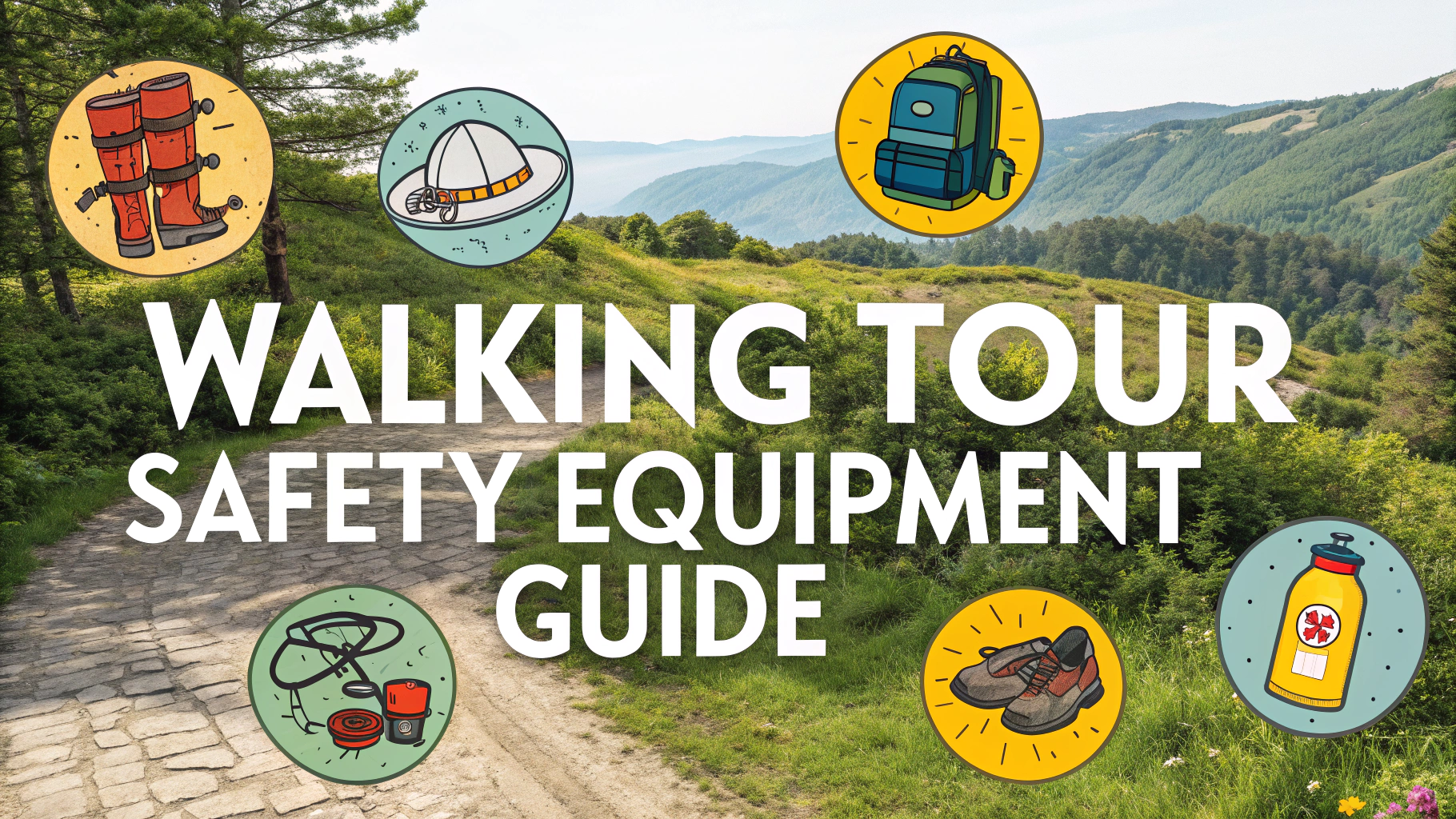
Recommended Equipment
- Comfortable, broken-in walking boots
- Waterproof jacket and trousers
- Navigation tools (map, compass, GPS device)
- First aid kit
- Water bottle and snacks
- Mobile phone with backup battery
Transportation Tips
Most walking routes connect with public transport – check National Rail for train services.
Local bus services often run parallel to popular walking routes – see Traveline for timetables.
Accommodation Options
- B&Bs (£50-100 per night)
- Youth Hostels (£15-30 per night)
- Camping sites (£5-15 per night)
- Country Inns (£80-150 per night)
Best Times to Walk
| Season | Advantages | Challenges |
|---|---|---|
| Spring (Mar-May) | Mild weather, wildflowers | Some rain, muddy paths |
| Summer (Jun-Aug) | Long daylight hours | Busy trails, higher prices |
| Autumn (Sep-Nov) | Fall colors, quiet trails | Shorter days, variable weather |
| Winter (Dec-Feb) | Peaceful walks, low prices | Cold weather, limited daylight |
Safety Tips
- Share your route plan with someone
- Start early to finish before dark
- Check tide times for coastal walks
- Carry emergency contact numbers
- Stay on marked paths
Useful Resources
- National Trails – Official information on England’s long-distance paths
- The Ramblers – Walking guides and route information
- Met Office – Weather forecasts
- Emergency number: 999 or 112
Trail Difficulty Levels
- Easy – Well-marked paths, gentle terrain, suitable for beginners
- Moderate – Some hills, varied terrain, basic fitness required
- Challenging – Steep sections, rough terrain, good fitness needed
- Strenuous – Mountain paths, exposed areas, experienced walkers only
Wildlife and Nature
Look out for native species including red squirrels, deer, and various bird species. Spring and summer offer excellent wildflower viewing opportunities.
Photography Tips
- Golden hours (dawn/dusk) offer best lighting
- Carry weather protection for camera gear
- Pack spare batteries and memory cards
- Consider a lightweight tripod for landscapes
Conclusion
Self-guided walking in England offers incredible opportunities to experience diverse landscapes and rich heritage at your own pace. Success depends on proper planning, appropriate gear, and respect for safety guidelines. Whether choosing a challenging long-distance trail or gentle day walks, the extensive network of paths provides options for all abilities and interests.
Final Checklist
- Route planned and downloaded
- Accommodation booked
- Weather checked
- Equipment prepared
- Emergency contacts noted
- Transport arrangements confirmed
FAQs
- What is the best time of year for self-guided walking tours in England?
Late spring (May-June) and early autumn (September-October) offer ideal conditions with mild temperatures and less rainfall. Summer months are also popular but can be crowded and accommodation may be more expensive. - Do I need special maps or guides for self-guided walks in England?
Yes, Ordnance Survey (OS) maps are essential for walking in England. You can get both paper maps and digital versions through the OS Maps app. Many popular trails also have dedicated guidebooks published by organizations like Trailblazer and Cicerone. - What are the most popular long-distance walking trails in England?
The most renowned trails include the Pennine Way, Coast to Coast Walk, Cotswold Way, South West Coast Path, and Hadrian’s Wall Path. These are well-marked and maintained by national park authorities. - What kind of accommodation can I expect along walking routes?
You’ll find B&Bs, guesthouses, pubs with rooms, hotels, and youth hostels. Many cater specifically to walkers and offer luggage transfer services, packed lunches, and drying rooms for wet gear. - How difficult is it to navigate English walking trails?
Most national trails are well-waymarked with acorn symbols. Public footpaths are marked with yellow arrows, and bridleways with blue arrows. However, basic map reading skills are still important, especially in remote areas. - What should I pack for a multi-day walking tour in England?
Essential items include waterproof jacket and pants, good walking boots, layers of clothing, first aid kit, maps, compass, water bottle, and emergency food. A mobile phone with backup battery is also recommended. - Are there baggage transfer services available?
Yes, many companies offer baggage transfer services along popular routes. They will transport your luggage between overnight stops, allowing you to walk with just a day pack. - What are the “Right to Roam” laws in England?
The Countryside and Rights of Way Act 2000 gives walkers the right to access certain open country, mountains, moors, heaths, and downs. However, this doesn’t apply to all land, and you must stick to marked paths in many areas. - How far in advance should I book accommodation for walking tours?
For popular routes and peak seasons (especially summer), book 3-6 months ahead. Some accommodations on well-traveled routes like the Coast to Coast can be fully booked up to a year in advance. - What is the typical daily walking distance on self-guided tours?
Most self-guided tours cover 8-15 miles (13-24 kilometers) per day, though this varies based on terrain and difficulty. Popular routes are often broken into manageable sections with accommodation at suitable intervals.